
What is multi channel inventory management and why does it matter?
Multi-channel inventory management is the centralized process of tracking and synchronizing stock quantities across multiple online marketplaces simultaneously, so every channel reflects your true available inventory in real time. Without it, selling the same item on eBay, Depop, and Shopify at once is basically playing Russian roulette with your stock count. One sale fires through, the others don’t update fast enough, and suddenly you’ve sold something you no longer have.
For eBay sellers specifically, the stakes are high. Overselling triggers negative feedback, defect rates climb, and account suspension becomes a real possibility. The core components of effective multi-channel inventory management include:
- Real-time sync across all active channels to reflect sales instantly
- Unified stock levels visible from a single dashboard
- Per-channel allocation based on actual sales velocity, not guesswork
- Automated delisting when an item sells to prevent duplicate orders
Tools like SpareDollar are built specifically for this workflow, letting sellers list once and push inventory updates across marketplaces without manually logging into each platform.
Table of Contents
- Challenges that trip up eBay sellers managing multiple marketplaces
- Why per-channel sales velocity data changes everything
- How automation software reduces errors and supports scaling
- Why SpareDollar fits eBay sellers managing multiple marketplaces
- Common misconceptions eBay sellers have about expanding to more channels
- Integration techniques that actually work with eBay and other marketplaces
- How to prevent overselling and stockouts across channels
- Handling returns and inventory reconciliation across channels
- Demand forecasting methods for eBay sellers on multiple marketplaces
- Security and data accuracy when syncing inventory across platforms
- SpareDollar makes multi-channel selling less of a headache
- Key Takeaways
- FAQ
Challenges that trip up eBay sellers managing multiple marketplaces
Selling on three or more channels sounds like more money. Sometimes it is. But the operational complexity grows faster than the revenue does. According to NetSuite, expanding to four or more channels often yields minimal incremental revenue while significantly increasing inventory complexity.
The pain points stack up quickly:
- Overselling from delayed sync: Manual updates or slow API polling means a sale on one channel doesn’t immediately reduce stock on others.
- Inventory silos: Stock sitting idle on a slow channel while a faster channel runs dry. Dead stock on one side, lost sales on the other.
- Demand forecasting gaps: Each channel has its own buyer behavior, seasonality, and velocity. Treating them identically is a mistake.
- Channel-specific policies: eBay’s item specifics requirements differ from Shopify’s product attributes. Fulfillment timelines vary too.
- Customer service load: Returns, disputes, and inquiries multiply across platforms without a unified view.
The revenue math is sobering. Merchants selling on 3+ channels generate 190% more revenue on average, but without centralized systems they lose 2–5% of that revenue to oversells and fulfillment errors.
Beyond the third channel, the complexity compounds disproportionately. NetSuite’s experts recommend a margin-first expansion mindset: add a channel only when your current setup is stable and automated, not just because the platform exists.
Why per-channel sales velocity data changes everything
Gut-feel inventory allocation is how sellers end up with 40 units sitting on a slow channel and zero units on the one that’s actually moving product. Sales velocity, the rate at which inventory moves through each individual channel, is the metric that fixes this.

Ecommerce Times puts it plainly: if Shopify and eBay account for large shares of your sales, your stock distribution should reflect those proportions, with safety buffers built in for demand spikes. Allocating inventory proportionally based on trailing data, then rebalancing weekly, keeps sell-through smooth across channels.
Best practices for data-driven allocation:
- Review trailing 7-day sales velocity per channel every week
- Set safety stock buffers at 5–10% above your calculated minimum per channel
- Reallocate dynamically when one channel’s velocity shifts significantly
- Track inventory turn rates; well-managed multi-channel operations typically aim for a high annual turn rate.
- Adjust “available” counts to exclude wholesale reserves and fulfillment service holds, or you risk selling phantom stock
How automation software reduces errors and supports scaling
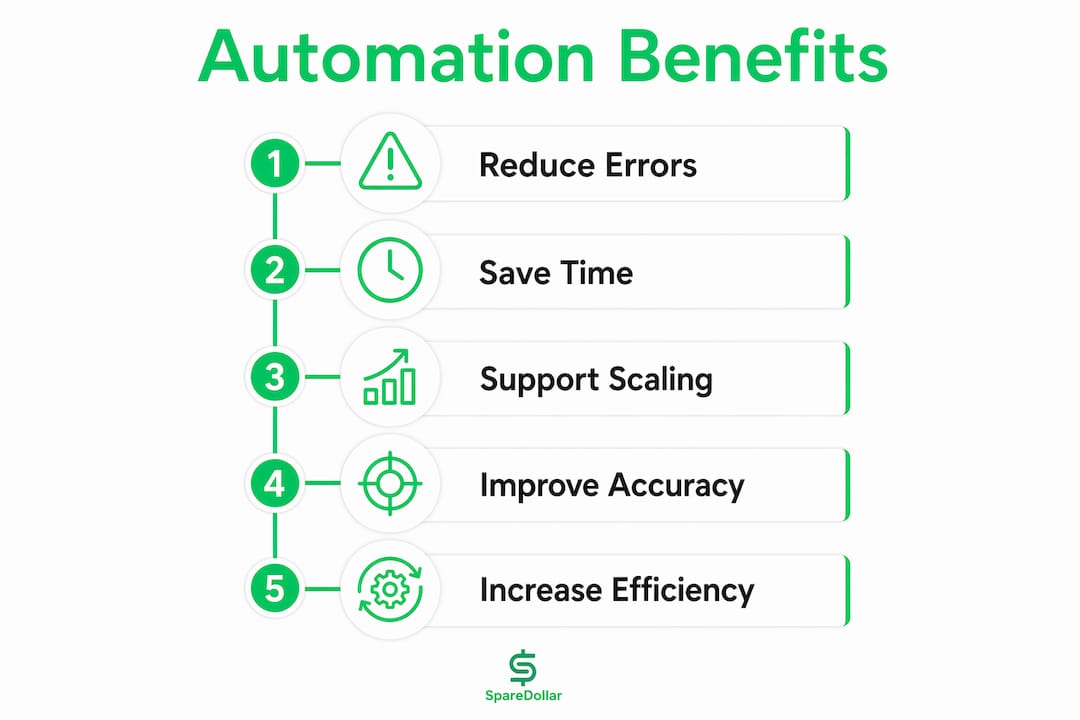
Manual inventory management across three or more marketplaces is not a workflow problem. It’s a headcount problem. Automation is the only way to scale without hiring a team just to update spreadsheets.
Real-time inventory sync via webhooks combined with periodic API polling for reconciliation delivers sub-minute updates across channels. That hybrid approach catches the edge cases that pure webhook setups miss during high-traffic periods.
Key automation benefits for eBay sellers:
- Bulk listing and editing tools cut the time to cross-list new inventory dramatically
- Per-channel pricing controls protect margins without manual price changes on each platform
- Automatic delisting on sale completion eliminates the “I forgot to take it down” oversell
- Centralized analytics surface which channels are actually profitable, not just busy
- AI-assisted listing drafts reduce the time spent writing descriptions from scratch
Pro Tip: When evaluating any inventory system for resellers, prioritize platforms that combine AI-assisted listing drafts with real-time sync. Writing a listing and syncing it are two separate time sinks; a tool that handles both in one workflow saves hours per week, not minutes.
SpareDollar’s AI-powered features cover exactly this: draft a listing once, let the AI fill in item specifics, then push it live across marketplaces with inventory tracked centrally from day one.
Why SpareDollar fits eBay sellers managing multiple marketplaces
Most multi-channel inventory tools are built for enterprise catalogs with thousands of SKUs. SpareDollar is built for eBay sellers who resell, which is a meaningfully different use case. The platform’s core capabilities address the specific friction points resellers hit daily:
- Unified listing creation with AI-assisted item specifics tailored to eBay’s requirements
- Real-time stock sync across eBay, Poshmark, Depop, Mercari, Shopify, and more
- Per-channel pricing so your eBay price and your Depop price can differ without manual edits
- Auto-delist on sale to prevent the oversell the moment an item moves
- Sales and profit analytics that show margin per channel, not just gross revenue
- Free imports from eBay, Poshmark, Depop, Mercari, and Shopify to get existing inventory into the system fast
Brand consistency across platforms is a real challenge when you’re listing the same item in five places. SpareDollar’s centralized control means your product descriptions, photos, and pricing logic stay coherent without copy-pasting across tabs. Think of it as the one ring to rule all your listings. (Tolkien would have been a great reseller.)
Explore SpareDollar’s marketplace integrations to see which channels are supported.
Common misconceptions eBay sellers have about expanding to more channels
The biggest one: more channels automatically means more profit. It doesn’t. Each new channel adds fulfillment complexity, customer service volume, and listing maintenance overhead. NetSuite’s guidance is direct: beyond the third channel, revenue gains often don’t justify the operational cost without automation in place first.
A few other myths worth correcting:
“I can manage it manually until I grow.” Manual management breaks at exactly the moment you need it most: during a high-velocity sales event when multiple channels fire simultaneously.
“All inventory management tools work the same for eBay.” eBay’s item specifics requirements are stricter and more category-specific than most platforms. Generic tools often require significant manual cleanup to meet eBay’s listing standards.
“Syncing inventory is enough.” Sync without per-channel allocation strategy still leads to dead stock and stockouts. The sync is the plumbing; the allocation strategy is the water pressure.
Integration techniques that actually work with eBay and other marketplaces
eBay’s API supports both real-time webhook notifications and polling-based reconciliation. The practical best practice is to use webhooks as the primary trigger for inventory updates and run a reconciliation poll every 15–30 minutes to catch any missed events. This hybrid approach, recommended by ECOSIRE, keeps stock counts accurate without overwhelming API rate limits.
For sellers managing Shopify alongside eBay, a direct integration that treats Shopify as the inventory source of truth and pushes updates outward to eBay and other channels works well. SpareDollar’s Shopify integration handles this without requiring a separate middleware layer.
Understanding ecommerce order management best practices also helps here: order routing logic needs to account for which fulfillment node holds the stock before confirming availability on any channel.
How to prevent overselling and stockouts across channels
A 5–10% global inventory buffer is the standard safety net for multi-channel sellers. It absorbs the latency between a sale and the sync update reaching every other channel. Beyond the buffer, these practices reduce risk substantially:
- Set channel-specific quantity caps rather than exposing your full stock count on every platform
- Use auto-delist rules triggered immediately on sale, not on a scheduled sync cycle
- Audit “available” inventory counts weekly to remove wholesale holds and fulfillment reserves from the sellable pool
- Monitor sync logs for failed updates, which happen more often than most sellers realize
Handling returns and inventory reconciliation across channels
Returns are where multi-channel inventory management gets genuinely messy. A return on eBay doesn’t automatically restock the item in your Shopify or Depop count unless your system handles it explicitly. Most don’t by default.
The cleanest approach: treat returned items as a separate inventory state (returned, not yet inspected) until they’re confirmed resellable. Only then reintroduce them to available stock across channels. Reconcile your physical count against your system count at least weekly. Discrepancies compound fast when you’re selling across five platforms simultaneously.
Demand forecasting methods for eBay sellers on multiple marketplaces
Trailing sales velocity is the most practical forecasting input for most resellers. Look at the last 7 and 30 days per channel, weight recent data more heavily, and build your restock decisions around those numbers rather than annual averages.
Seasonal patterns matter on eBay more than most channels. Collectibles, electronics, and apparel all have distinct peak periods. Layering seasonal multipliers onto your velocity baseline gives you a more accurate restock trigger than raw trailing data alone. For sellers managing fulfillment costs across channels, tighter forecasting directly protects margin by reducing carrying costs on slow-moving stock.
Security and data accuracy when syncing inventory across platforms
API credentials for each marketplace integration should be stored with OAuth tokens rather than plain passwords, and access permissions should be scoped to inventory and listing functions only. Broader permissions than necessary create unnecessary exposure if a token is compromised.
Data accuracy degrades when sync failures go undetected. Build in alerting for failed sync events, and run a weekly manual spot-check comparing physical stock to system counts on your top 20 SKUs. Discrepancies caught early are a minor fix; discrepancies caught after a week of selling are a customer service crisis.
SpareDollar makes multi-channel selling less of a headache
Cross-listing inventory across five marketplaces without a dedicated tool is the kind of thing that sounds manageable until it very much isn’t. SpareDollar gives eBay sellers a single place to create listings, sync stock in real time, set per-channel prices, and track profit without toggling between browser tabs like it’s 2012.
The free trial lets you import existing inventory from eBay, Poshmark, Depop, Mercari, or Shopify and see the workflow before committing. No spreadsheet archaeology required. Start managing your inventory across every marketplace from one dashboard and find out why sellers who try it tend to stick around.
Key Takeaways
Effective multi-channel inventory management requires real-time sync, per-channel allocation based on sales velocity, and automation that removes manual errors before they cost you sales or your seller account.
| Point | Details |
|---|---|
| Real-time sync is non-optional | Delayed updates cause overselling; webhook plus polling reconciliation keeps counts accurate across channels. |
| Channel count has diminishing returns | Expanding beyond the third channel often yields less than 5% incremental revenue but increases inventory complexity by 25–30%. |
| Velocity-based allocation prevents dead stock | Weekly rebalancing based on trailing 7-day data targets 8–10 inventory turns annually. |
| Buffers absorb sync latency | A 5–10% global inventory buffer reduces oversell risk during sync delays. |
| SpareDollar centralizes the workflow | SpareDollar handles AI-assisted listing, real-time stock sync, per-channel pricing, and auto-delist in one platform built for eBay sellers. |
FAQ
What is multi-channel inventory management?
Multi channel inventory management is the centralized tracking and synchronization of stock quantities across multiple sales platforms so every channel reflects accurate, real-time availability. It prevents overselling, stockouts, and the negative feedback that follows.
How does inventory sync across marketplaces work?
Most systems use webhooks to trigger instant updates when a sale occurs, combined with periodic API polling to catch any missed events. This hybrid approach delivers sub-minute inventory updates across connected channels.
Why do eBay sellers specifically need dedicated inventory software?
eBay’s item specifics requirements are stricter and more category-dependent than most platforms, and generic tools often require manual cleanup to meet those standards. Purpose-built tools like SpareDollar handle eBay’s requirements natively.
How much inventory buffer should multi-channel sellers maintain?
A 5–10% global inventory buffer is the standard safety net for multi-channel sellers. It absorbs the latency between a sale and the sync update reaching every other channel.
Can SpareDollar import existing listings from other platforms?
Yes. SpareDollar offers free imports from eBay, Poshmark, Depop, Mercari, and Shopify, so sellers can bring existing inventory into the system without rebuilding listings from scratch.